Smart stadiums have radically changed the live sports experience in the past few years. The sports business's bottom line, the effectiveness of the operation, and fan interaction are all being improved by these technology-driven stadiums. Smart stadiums employ data to optimize the management of stadiums and give fans an immersive, customized experience, from AI-based crowd management to live sports analytics. Making match-day experiences richer and the game more accessible and interactive than ever. This is done by integrating live match data and sports data feeds.
Real-time data is not an optional feature for any sports business; it is essential. In order to enable smart stadiums to deliver precise, real-time analytics and engagement tools, Data Sports Group (DSG) provides comprehensive sports data solutions.
A Smart Stadium: What is It?
To enhance operational effectiveness and fan experience, a smart stadium employs digital technology, real-time analytics, and Internet of Things-based solutions. Unlike traditional arenas, these stadiums provide:
Seamless Communication: Viewers are always on because of 5G networks and fast Wi-Fi, which enable interactive content, live streaming, and in-play betting.
AI-Driven Analytics: In order to optimize stadium operations and fan experience, advanced algorithms analyze player performance, ticket sales, and crowd movement.
IoT Integration: Stadium management may make data-driven choices by using sensors to monitor anything from foot movement to food sales.
Enhanced Security: Attendee safety is increased via AI-based crowd management, surveillance, and facial recognition technologies.
Revolutionizing Fan Engagement through Real-Time Data
The capability to allow fans to enjoy real-time sporting commentary is among the primary advantages of smart stadiums. Real-time stats can be viewed either from seats or using an app that fetches the game data to ensure a superior viewing experience.
 Fans who have access to live match insights can:
Instant Replays: AR-enhanced replays and multi-angle views offer a thorough examination of crucial game situations.
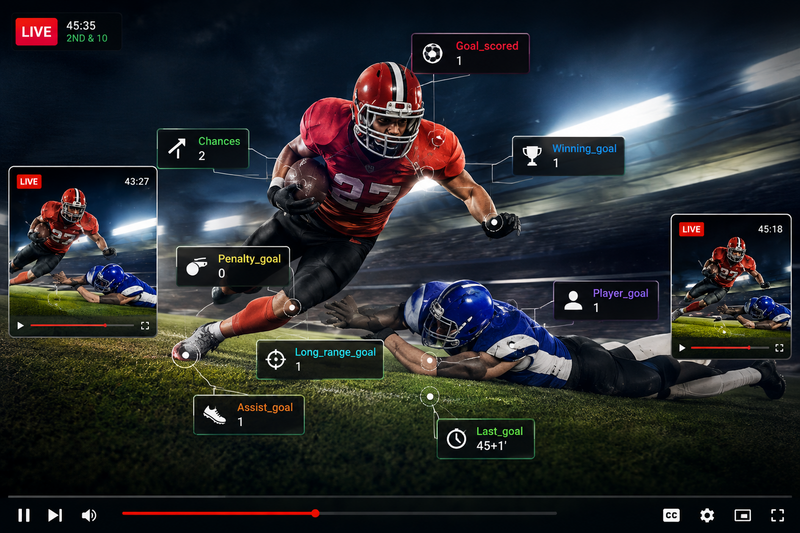
Player Performance Information: Digital boards and applications show real-time statistics including speed, distance traveled, and passing accuracy.
Interactive Visualizations: Win probability graphs, possession charts, and heat maps all improve player involvement during gameplay.
Opportunities for Live Betting: Real-time sports analytics are integrated into sports betting systems to enable rapid wagering depending on changing match conditions. In order to make game viewing more participatory, smart stadiums also make use of fan interaction features including loyalty programs, tailored alerts, and augmented reality experiences.
How Stadium Operations Are Improved by Data
Data plays a critical role in stadium operations and management as well as improving the fan experience. Predictive analytics is utilized by intelligent stadiums to enhance security protocols, optimize food and beverage sales, and predict crowd flow.
AI-Assisted Stadium Administration: To efficiently manage stadium logistics, AI and machine learning examine both historical data and current data flow. Crowd Control: Cameras and sensors driven by AI track the density of the crowd, forecast areas of congestion, and reroute foot flow. Food and Beverage Optimization: By tracking demand trends, smart ordering systems reduce waste and wait times. Dynamic Ticket Pricing: Pricing algorithms based on AI adjust ticket prices according to demand, maximizing occupancy and revenue. Besides providing a better experience for fans, these AI-based technologies assist stadium managers in reducing costs and boosting revenue.
The Growth of Fantasy Sports & Betting and Smart Stadiums
The need for real-time sports data has been further spurred by the growth of sports betting and fantasy sports websites. Fans now need data-driven interaction rather than passive game-watching.
Football data APIs and live match analytics have made it possible for betting sites and fantasy sports operators to provide more engaging experiences, such as:
Player performance metrics in real-time: Assisting users in making tactical choices for fantasy leagues.
Live betting odds are adjusted in accordance with things that happen on the field, providing bettors with accurate predictions. The study of historical data allows bettors to analyze player statistics, team performance, and trends before placing bets.
High-quality sports data feeds are essential for precise player performance tracking in fantasy sports enterprises. A strong sports data API guarantees that consumers receive accurate and timely real-time updates.
: The Ultimate Data Partner for Smart Stadiums
 Sports companies, media outlets, and bookmakers need a reliable sports data supplier in order to fully realize the promise of smart stadiums. With its cutting-edge sports data solutions, Data Sports Group (DSG) drives smart stadiums with match insights, real-time analytics, and comprehensive statistics coverage.
DSG offers unmatched real-time sports intelligence, such as detailed individual statistics, team performance, and match analytics. Seamless Sports Data API Integration: Seamlessly integrating with fantasy sports apps, sports betting websites, and stadium video boards. AI-Driven Predictive Analytics: Leveraging machine learning to forecast player performances, match outcomes, and fan engagement. Extensive Multi-Sport Coverage: With real-time sports feeds, our platform includes football, basketball, cricket, rugby, and more. Reliable & Accurate Data Delivery: Ensuring that live sports insights get delivered as fast and accurately as possible.
Where is the industry going in terms of smart stadiums?
The sports industry is shifting toward fully connected, data-powered ecosystems as long as venues and sports organizations keep investing in smart stadium technology. Among the anticipated trends are:
AI-Driven Fan Personalization: Based on fans' tastes and behavior, stadium apps will allow for personalization.
Augmented Reality (AR) and Virtual Reality (VR) improvements: Supporters will be allowed to view moves and strategic strategies through AR.
Advanced Biometric Access Control: Digital ticketing and facial recognition will improve stadium security and access procedures even further.
Blockchain-Based Ticketing: Guarding against fraud and guaranteeing digital ticket validity.
Sports data providers like DSG will be essential in supplying the data infrastructure of smart stadiums with these advancements. The future of fan interaction will be determined by the capacity to provide live match statistics, real-time sports insights, and AI-driven forecasts.
A new age of live sports entertainment is being brought about by the advent of smart stadiums, where data-driven experiences enhance company profitability, operational efficiency, and fan experience. Sports businesses must collaborate with a reliable sports data provider in order to remain competitive, considering the increasing need for real-time sports analytics and live match data.
Pioneering the sector, Data Sports Group (DSG) is well-placed to provide cutting-edge sports data solutions that provide accurate, real-time analytics to sports businesses. Stadiums may improve the live sports experience by incorporating DSG's sports data streams, guaranteeing that operators, companies, and spectators all gain from the newest developments in real-time sports technology. The era of smart stadiums is here, thanks to Data Sports Group.