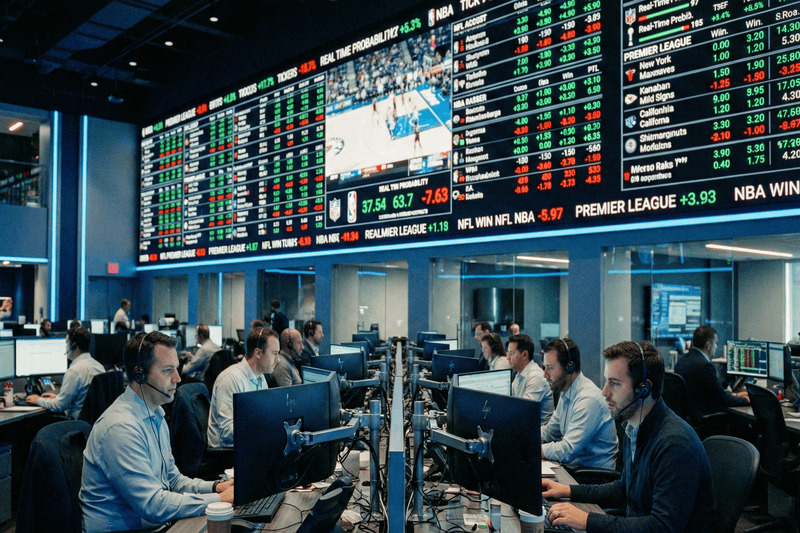
The line between a sports fan and a day trader has dissolved.
Walk into a modern sportsbook or log into a prediction exchange and you aren’t just seeing fans backing their home team. You see sophisticated actors executing arbitrage strategies, hedging exposure and hunting for "alpha" in player performance metrics. Sports betting is being financialized. It is no longer a game of chance; it is an asset class.
For operators of prediction markets and betting exchanges, this shift presents a massive engineering challenge. You are no longer building a casino; you are building the Nasdaq of Sport. And just like the Nasdaq, your platform’s liquidity and trust depend entirely on the fidelity of the underlying data.
The Landscape: Two Paths, One Requirement
The shift toward financialized betting is already here, split into two distinct regulatory models. Regardless of which path you choose, the need for data integrity remains absolute.
- The Federal Model (Event Contracts): Platforms like Kalshi and Interactive Brokers’ ForecastEx operate under federal oversight from the CFTC (Commodity Futures Trading Commission). They treat sports outcomes as derivatives, requiring the same data rigor as a commodities future.
- The State Model (Betting Exchanges): Operators like Sporttrade and Prophet Exchange function under state gaming licenses (e.g., the New Jersey Division of Gaming Enforcement or Colorado Division of Gaming). They offer a "stock market" experience where users buy and sell positions in real-time.
Whether you are building a federally regulated event market or a state-licensed exchange, your users are no longer "punters"—they are traders. And traders do not tolerate ambiguity.
From Fan to Trader: The Liquidity Problem
In a traditional sportsbook, the house sets the price. In a prediction market, the market sets the price. For this ecosystem to thrive, you need liquidity—volume on both the buy and sell sides.
But "traders" (your high-value users) will not provide liquidity if they cannot trust the settlement. In financial markets, a stock price is absolute. In sports, a "Shot on Target" or a "Successful Dribble" can be subjective if your data provider uses loose definitions.
If a trader shorts a player's passing accuracy and loses money because of a data discrepancy, they don’t just leave the trade; they leave the platform. To attract institutional-level liquidity, you need institutional-level trust.
The Trade-Off: Speed is Vanity, Veracity is Sanity
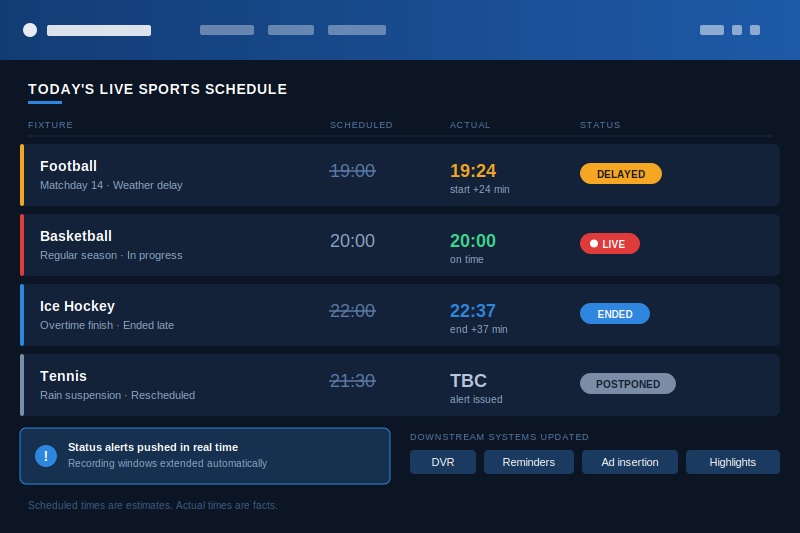
In the traditional betting world, low latency is the god metric. Bookmakers need millisecond-fast data to block late bets and protect their margins.
But for an exchange operator, accuracy outweighs speed.
Imagine a scenario where a data feed rushes to confirm a "Goal" that is ruled out by VAR two minutes later. A sportsbook simply suspends the market. But on an exchange, that signal might have triggered automated settlement logic, moving funds from Buyer A to Seller B.
To fix this, you have to "unwind" the trade—clawing money back from users' wallets. This is a user experience disaster that destroys trust instantly.
This is why Data Sports Group prioritizes the "Golden Record." While we maintain competitive latency, our architecture is designed for veracity. We focus on the finality of the event, ensuring that when your platform executes a settlement, it never has to apologize for it later.
"Financial-Grade" Data: The New Standard
To support the Wall Street of Sports, operators must upgrade from basic betting feeds to financial-grade data pipelines. This requires two specific layers of infrastructure.
1. Indisputable Settlement (The "Truth" Layer)
When users are trading thousands of dollars on whether a specific event occurs, "fast" isn't enough. The data must be verifiable.
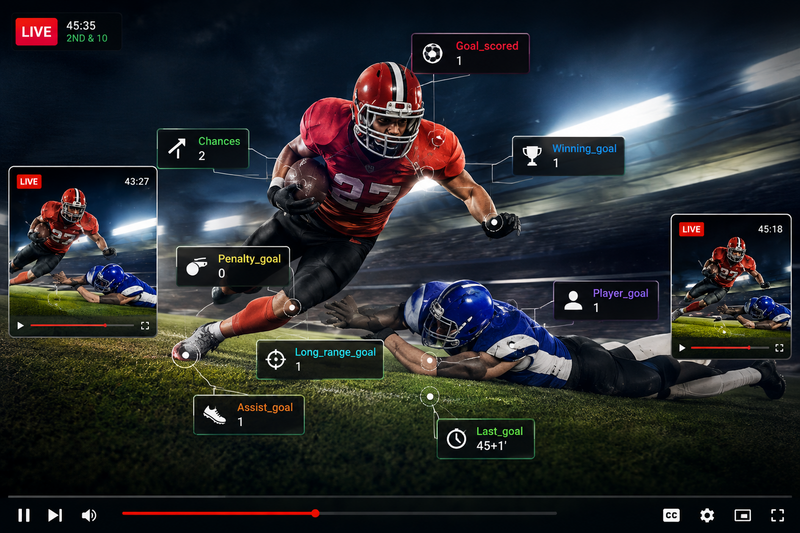
Your granular settlement API needs to go beyond the final score. It needs to provide deep, event-level definitions that stand up to audit. Did that receiver get both feet down? Was that tackle a foul or a fair challenge? DSG’s coverage includes the granular metadata—XY coordinates, timestamped events and precise definitions—that eliminates ambiguity.
2. Backtesting the Edge (The "Alpha" Layer)
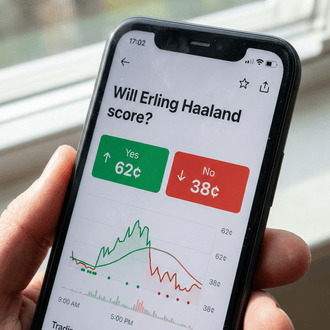
Serious traders do not guess; they model. Just as a quant fund backtests a strategy against 20 years of market data before deploying capital, sports traders need to validate their algorithms against historical reality.
But generic box scores are insufficient for this level of modeling. To build a true edge, traders need granular, contextual datasets that allow them to isolate variables.
- Advanced Metrics: It isn't enough to know a team won. Traders need Expected Goals (xG), Expected Assists (xA) and Possession Value to determine if the result was skill or luck.
- Situational Splits: How does a quarterback's completion percentage deviate when playing in temperatures below 0°C? How does a tennis player's unforced error count shift on clay versus grass?
- Referee & Environmental Data: We provide metadata on officiating tendencies (foul frequency, card strictness) and stadium-specific variables.
This is where the depth of your archive becomes your strongest marketing asset. Offering access to historical sports data for backtesting allows your users to validate their strategies before they risk a cent.
Building the Bloomberg Terminal of Sports
The winners in the next phase of sports betting won't be the ones with the flashiest ads. They will be the ones who build the best tools for the traders.
By integrating robust, financial-grade data, you aren't just offering a bet. You are offering a derivative product with integrity. You are giving your users the confidence to treat sports as a serious investment vehicle.
Data is the bridge between a casual viewer and a superfan. In the world of prediction markets, it is also the bridge between a gamble and a trade.