Sports media rights just hit a record, and almost none of the money reaches the sports outside the top 10. Global sports media rights are worth $65.82 billion in 2026, according to the SportBusiness Global Media Report 2026, as reported by Reuters this week. A soccer World Cup hosted in North America and a Winter Olympics in the same year did much of the lifting, helped by new NBA and UFC agreements.
The headline number hides how unevenly that money is spread. The US now accounts for 53.9% of global rights value, up from 46% in 2022. The NFL and NBA alone make up 30%, and the Premier League another 7.8%. Outside the top 10 sports, each one shares roughly 1% of the market, according to SportBusiness editor Joseph Perry. "There is more money being spent than ever, but it's not being widely spread," he told Advanced Television.
A Market With a Very Long Tail 
That leaves most of sport competing for a small slice. Federations, second tier leagues and Olympic sports in the years between Games rarely see a big broadcast cheque, and the report suggests the gap is widening. Reuters also notes that the total is forecast to fall to $62.2 billion in 2027, once this year's big events have passed.
For these properties, the rights fee is only part of the story. They also need to be easy to find and easy to cover: on streaming platforms, in apps, on betting screens and, more and more often, in the answers AI assistants give when a fan asks who won or what is on tonight.
 Coverage Depends on Data
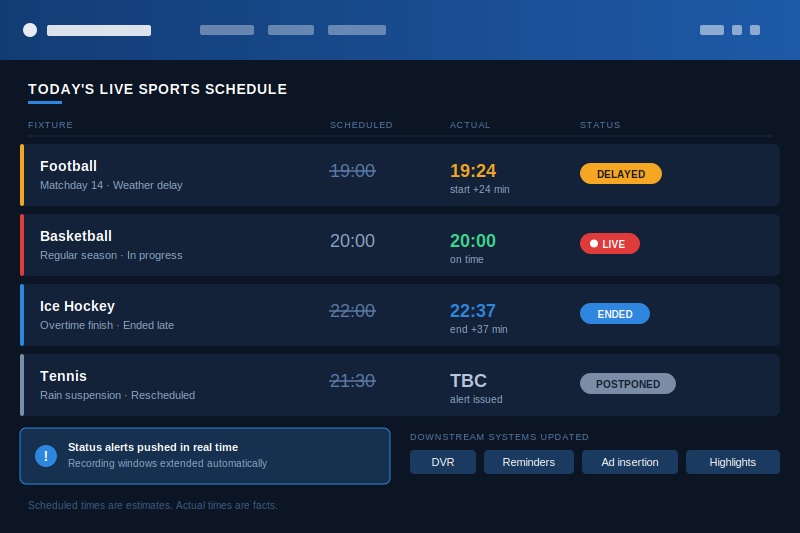
A match with no clean fixture, no live score and no result feed is close to invisible online. Platforms and media groups decide what to carry partly on what they can present well, and presentation depends on structured data: schedules, line-ups, results, standings and player records that update without someone typing them in.
This is where smaller sports can compete without an NFL budget. A well maintained data feed costs far less than a broadcast production, and it travels further. The same feed can power a federation's website, a broadcaster's graphics, a betting operator's markets and the search results that bring new fans in.
Streamers are already buying with volume in mind. YouTube prefers to acquire rights in bulk packages over single events, CNBC reported earlier this month. A platform that buys volume needs data that covers volume, including competitions well below the headline deals.
The DSG Advantage: Coverage Beyond the Headline Deals
- DSG covers more than 80 sports and thousands of competitions, including federations and leagues that rarely make the rights headlines.
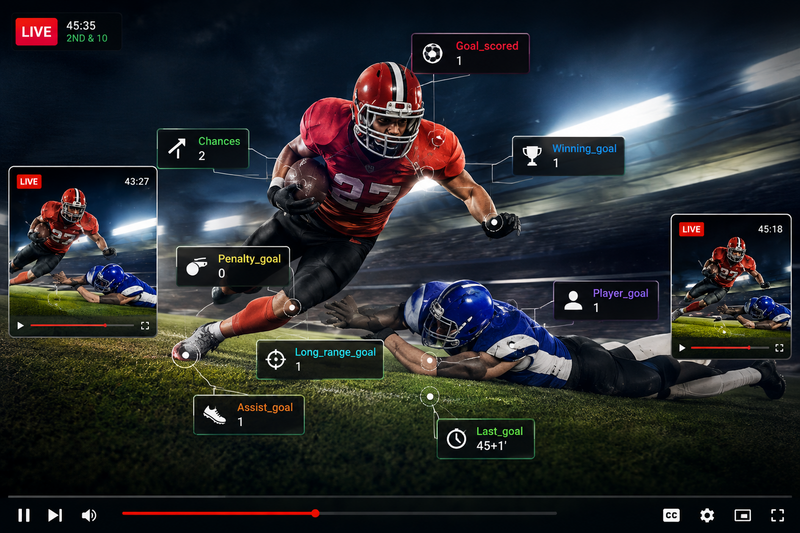
- Fixtures, live scores, results, standings and player and team data come through one set of APIs, ready for websites, apps and broadcast graphics.
- Pre-match, live and post-match data built for media use, so a smaller competition can be covered with the same depth as a major one.
- Historical archives built over two decades give editors and AI products the context fans ask for.
Making Every Sport Easy to Cover
The rights market will keep rewarding the biggest names, and the forecast dip in 2027 shows how much of the growth rests on a few events. For every other sport, the practical goal is to become the easiest one to cover. Properties that invest in their data now will be the ones platforms, broadcasters and AI search tools can actually put in front of fans when the next round of deals comes around.