The complete manual for data feeds for your fantasy soccer business! Create a successful fantasy soccer platform by utilizing these insightful tips concerning data feeds.
Think about fantasy soccer without data. A self-sustaining and unbreakable fantasy soccer app allows you to play in all the major leagues, including the EPL, La Liga, Champions League, Bundesliga, and Serie A. Fantasy operators need quality data feeds for in-game scores and stats, live games, post-game information, players and leagues, player news feeds, and more. The precision of the data inputs, however, is what actually powers the entire system. How do data feeds work? Let's investigate.
Data feed: What is it?
Data feeds are continuous streams of structured information based on real-time player performance. The stream of a data feed might be constant or sporadic. Data feed enables the delivery of in-game updates and scoring adjustments while also adding transparency to the daily fantasy soccer business model. A data feed provider often offers a number of components and updates in XML or JSON format. These are the accepted formats for exchanging and consuming any kind of information across two separate systems industry-wide.
 Why are data feeds necessary?
You require a data feed provider if you intend to launch a daily fantasy soccer website. The website will be able to update the scoring in real-time or continually update the player roster based on their in-game activity thanks to data streams. This increases data transparency and reliability on the website. Data feeds are also useful for creating your own scoring rules. But here are the most important uses of sports data feeds-
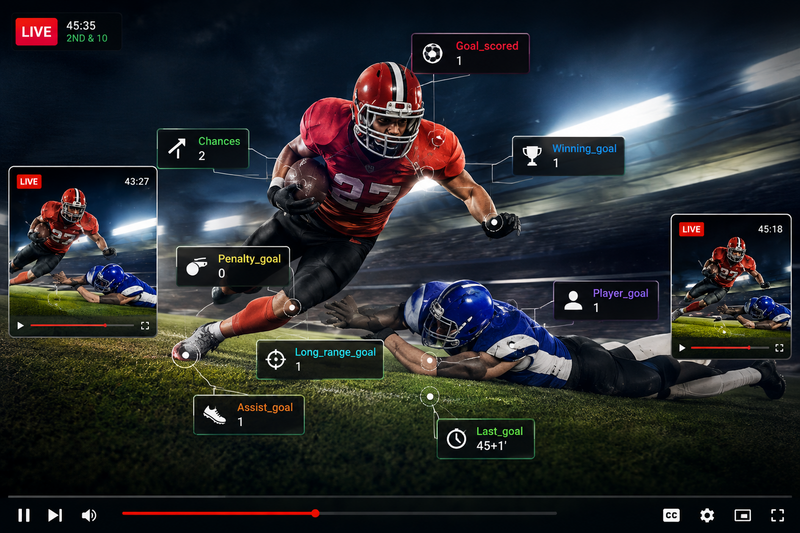
1. Real-time Updates: Soccer data streams include real-time updates on games, player performances, goals, assists, and other crucial statistics. This enables fantasy football participants to monitor the performance of their squad and make effective adjustments when necessary.
2. Player Performance Metrics: Fantasy football participants rely on accurate player performance data to assess the value of players for their fantasy teams. This includes data on goals scored, assists, clean sheets (for goalkeepers and defenders), successful passes, and more.
3. Injuries and Suspensions: API soccer stats include information about player injuries and suspensions. This is crucial for fantasy football managers to adjust their lineups and make substitutions accordingly.
4. Player Rankings and Form: API Football Rankings provide insights into players' current form and overall performance rankings. Fantasy football managers can use this data to identify in-form players and make strategic decisions for their teams.
5. Gamification and User Engagement: With live data feeds, fantasy football platforms can incorporate various gamification elements, such as leaderboards, challenges, and rewards, to keep users engaged and motivated throughout the season.
Suppliers of data feeds
 Above we discussed what are data feeds and how important they are for any fantasy platform. The main question that now arises is how to choose a sports data provider? Many businesses provide fantasy soccer data feeds when it comes to data feeds. Finding companies whose data streams are prepared to serve fantasy soccer applications is crucial as well. Additionally, different sports data providers have varied features and fees attached to their feeds and you even need extremely powerful algorithms to power your fantasy soccer games. These data feeds also contribute to improving the user experience as a whole.
When selecting a provider for soccer data feeds in fantasy football, there are several factors to consider, such as data accuracy, reliability, coverage, API functionality, pricing, and customer support. Here are some reasons why Data Sports Group could potentially be a good choice:
1. Data Accuracy and Reliability: Data accuracy is crucial in fantasy football as it directly impacts player scores and team performance. DSG's track record in providing accurate and reliable data can be a significant advantage to you.
2. Comprehensive Data Coverage: DSG offers comprehensive coverage of various soccer leagues and competitions worldwide, ensuring that fantasy football managers have access to a wide range of data for player selection and analysis.
3. Real-time Updates: Real-time data updates are vital for fantasy football, as they enable participants to make timely decisions, such as substitutions, based on the latest match events.
4. API Functionality: DSG's soccer API is user-friendly and well-documented, making it easier for fantasy football platforms to integrate the data feeds seamlessly.
5. Data Customization: The ability to customize the data feeds to suit specific fantasy football needs allows for a more tailored and personalized experience for users.
6. Pricing and Flexibility: DSG's pricing model and plans are competitive and flexible, catering to the needs of different fantasy football platforms, whether they are large-scale operations or smaller projects.
7. Customer Support: Excellent customer support is essential, ensuring that any technical issues or questions related to data feeds are promptly addressed.
For any fantasy sports to be successful, soccer data feeds stay fundamental. They empower participants with accurate and timely information, allowing them to make strategic decisions, manage their teams effectively, and compete in a dynamic and engaging fantasy football environment. Thus if you are developing a new app, including soccer data feeds early on would be a very wise choice. Even if you already have an app live in the market you can still get in touch with Data Sports Group to integrate quality data feeds with your platform easily.