Everything, including coaching choices and fantasy sports, is driven by sports analytics. Data and statistics are crucial to the industry, as anyone with even a passing interest in college or professional sports broadcasting is well aware. Big data is the most important participant in the market, contributing everything from historical information and basic scorekeeping to algorithmic performance predicting and incredibly precise player statistics.
Teams and organizations may track performance using data, anticipate outcomes, and make more informed choices on the field. Want to know which play to use in a football game on fourth down? Analyze the data. Do you have second thoughts about letting your pitcher go for one more inning? Analyze the data. Even while players still win games, data enables coaches to position their players for success.
The way sports fans watch their favorite teams has also included analytics. Off the pitch, analysts, pundits, and fans frequently utilize data to explain play-by-play, discuss projections, or influence fantasy league selections. Nowadays, adding data analysts to sports staff is commonplace, whereas earlier data analysts were often overlooked in sports. Thus, the importance of sports analytics seems to be increasing as players and coaches look for whatever statistical advantage they can get.
 Sports Analytics: What Is It?
Sports Analytics is a relatively contemporary discipline that utilizes data to assess factors like athletic performance and organizational health to enhance operations and the overall effectiveness of a sports organization. Metrics from on-field data assist teams in determining how to enhance in-game strategy, dietary regimens, and other techniques for enhancing the performance of their athletes. Off the pitch, businesses may use data to track ticket sales, create marketing strategies, and save expenses. Off the pitch, analytics play a significant role by giving fans information about fantasy sports and sports betting.
Along with professional teams, bettors and fans have also gotten involved. Data is used by sports betting analytics firms to calculate the likelihood that a particular game outcome will occur. Then, when placing bets, choosing players for a fantasy team, and making other decisions based on statistical information, fans take these chances into account.
Growing Sports Analytics
Sports and data have long had a tight relationship. Much like newspapers print box scores and baseball cards display a player's career numbers, radio broadcasters have historically used facts to provide context to their commentary, such as the average amount of yards a running back has gained in each game they've played.
Players are assessed by general managers and coaches using a combination of numbers, such as points, batting average, or yards thrown (depending on the sport), and a subjective gut feeling, such as "This player is due for a hit." Beyond those superficial numbers, however, further data analysis is typically resisted by both coaches and players.
But early statisticians like Bill James began using data in the 1980s to refute those irrational presumptions. In a book named The Bill James Historical Baseball Abstract, James made public the Sabermetrics statistical technique he developed to rate baseball players. He developed mathematical formulas like "runs created" that took into account a baseball team's offensive statistics to forecast how many runs they would probably score.
 According to the Society for American Baseball Research, it was his first attempt at a method to help general managers optimize their teams by objectively analyzing players. When Oakland Athletics general manager Billy Beane used sports analytics to assemble a squad of lesser-known players that came close to winning a World Series in 2002, the field of sports analytics began to take off. His "Moneyball" method of statistically optimizing a squad swiftly spread to other teams as the standard approach to managing a team.
Since then, each major sport has had a unique evolution in analytics, with clubs hiring data scientists and looking for new ways to objectively evaluate athletes and gain a competitive advantage. For instance, because three-pointers and layups are the most effective shots in the game according to shot chart research, basketball clubs now focus their offences around them.
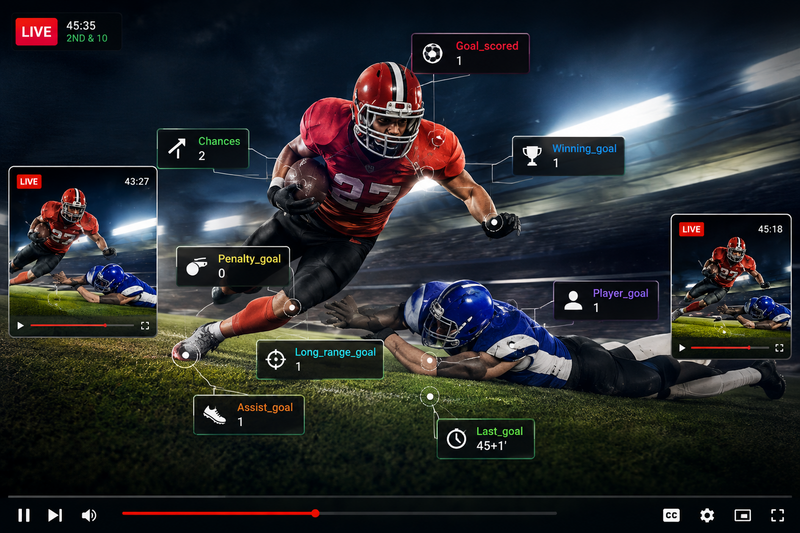
In a 2021 report, Research and Markets predicted that the global sports analytics market would grow to $3.4 billion by 2028. Sports statistics have advanced to the next level thanks to tracking software and machine learning. Businesses are able to gather statistical data from film footage to support coaches in improving their play-calling throughout games or to produce post-game insights. Others use cameras and machine learning algorithms to track player movement, ball speeds, and spin rates. These factors are regularly considered by teams when making decisions and are frequently shown during broadcasts. For instance, baseball players and coaches routinely use iPads to examine statistics like pitch distributions and make adjustments during games.
Sports fan consumption has also changed as a result of analytics. Fans may visit websites to learn more about data-based sports coverage and the chances of their favorite team winning the title. In football or baseball, broadcast commentators frequently extensively out a player's breakaway speed or launch angle after a home run. Even when forecasting the top players in fantasy sports, it is a mainstay. It took a while for sports analytics to advance from the sidelines to the front, and it doesn't seem like it will be leaving anytime soon.
Now you might be wondering how to start using Sports analytics like a pro? Well, Data Sports Group offers raw reliable sports data for sports analytics. Due to their comprehensive and reliable live score data feed, advanced analytical tools, innovative solutions, and extensive coverage across various sports they are the best choice for all your business needs. They offer a seamless integration process, customizable solutions, and a track record of delivering valuable insights to sports organizations, making them a trusted and preferred partner for sports analytics.