It takes more than simply muscle or talent to win in today's very competitive sports climate; strategic knowledge is also necessary. Predictive analytics is becoming more and more important in determining sports strategy, according to broadcasters, professional teams, bookies, and fantasy sports websites. Predictive models can now more accurately forecast game results, maximize team performance, and customize fan interaction than ever before, thanks to the usage of enormous datasets, artificial intelligence algorithms, and real-time inputs.
What was once a catchphrase is now a critical ability. Understanding the use of predictive analytics in sports strategy is now crucial for any sports platform hoping to stay ahead of the competition.
Behind the Scenes, Predictive Analytics is Transforming the Game
Predictive analytics is essentially the technique of forecasting future occurrences via the use of historical data, machine learning, and statistical models. In sports, this relates to forecasting player performances, game results, injury possibilities, and even audience behavior. Numerous business and on-field choices are influenced by these forecasts, ranging from user retention tactics and content distribution to roster management and training intensity.
Data Sports Group (DSG) offers a significant competitive advantage in this regard. DSG provides sports platforms with the actionable information they want to make quicker, more informed choices by providing access to a complete, AI-enhanced data feed ecosystem.

The Significance of Predictive Analytics as a Strategic Need
Predicting sports results is no longer limited to betting sites. It helps teams hone their strategies. It is used by media companies to schedule broadcasts. It helps consumers draft more effectively on fantasy marketplaces. Additionally, entrepreneurs leverage it to provide intelligent, customized user experiences.
Among the most significant use cases are: AI-based wear-and-tear modeling for player load control and injury avoidance. Opponent scouting employs pattern recognition and historical trends. Dynamic ticket prices depending on anticipated attendance or game outcomes. Algorithms that propose content based on predictions of team performance and fan involvement. These applications demonstrate the increasing data-driven nature of sports strategy. Through the use of deep historical datasets and sports vision AI, DSG's predictive models allow platforms to leverage this shift without starting from scratch.
AI and Sports Vision: The Prospects for Tactical Understanding
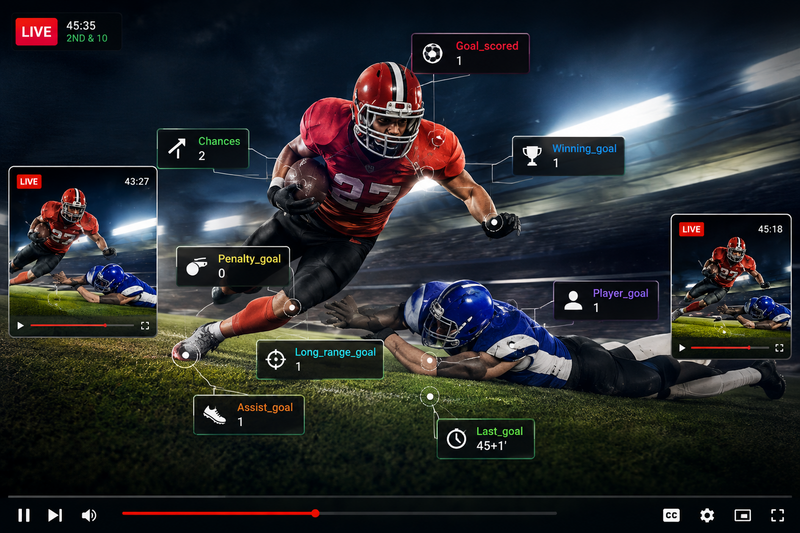
Sports vision is one of the most fascinating areas in predictive analytics. AI is the process of understanding real-time games and turning them into an intelligent strategy by combining computer vision and prediction models. Think of it as automatic, data-driven coaching. Sports vision AI may do the following by examining spatial data, including player motions, ball trajectories, and in-game formations: Make suggestions for the best player placement. Determine any tactical inefficiencies. Project the results as they change. Provide broadcasters or analysts with automatic post-match insights.
By providing ready-to-integrate, vision-enhanced predictive data solutions, DSG fills the gap for startups and platforms without the resources of major leagues, expediting development and performance.
 Predictive Analytics for Fantasy and Fan Interaction Sites
There has never been a greater need for sophisticated and real-time fan experiences. Whether it's personalized alerts, dynamic content feeds, or suggestions for their fantasy squad, fans now want platforms to know what they want before they do. Predictive analytics is the technology that makes this customization possible. DSG's data feeds aren't static; they're designed to deliver specific outputs via modular APIs, update in real time, and adjust to context. As a result, platforms can: Suggest top-performing fantasy sports players. Provide team-specific news, statistics, or alerts to supporters. During live matches, provide precise victory odds. Make a bet slip or fantasy combination recommendations based on past results and user behavior.
Longer session durations and deeper engagement are the outcomes of platforms combining user data with sports outcome prediction; these metrics are important in all revenue models.
The DSG Advantage: Real-time, scalable, and predictive
Predictive analytics is only as strong as the data that supports it. From early-stage companies to business platforms, Data Sports Group guarantees that each customer has access to: performance information in real time for more than 900 leagues and 70 sports. Contextual information, including head-to-head statistics, injury history, and weather. Models that are adaptable and enable use cases and KPIs unique to each customer. Clear JSON APIs that are intended for low-latency delivery and smooth integration.
With predictive modeling and sports vision AI built within the platform, DSG prioritizes forward-thinking solutions in contrast to static data suppliers. DSG provides the infrastructure to support all of your goals, whether they are to increase betting accuracy, power your fantasy app, or enhance tactical coaching.
Using Prediction to Make Sports Smarter
Predictive analytics will be the unifying factor among all effective tactics as the sports sector develops. Not only will platforms that put an emphasis on forecasting, pattern recognition, and adaptive insights perform better, but they will also change the way that sports performance and fan interaction are perceived. Platforms can unleash a future where sports strategy is data-first, analytics-rich, and scalable across all use cases—from fan customization to team management—by collaborating with Data Sports Group.