Today's data-driven sports landscape has adopted technology in its every aspect, from quantifying, evaluating, to enhancing player performance. Nothing is based on intuition anymore. Real-time athlete monitoring is made possible with wearable tech that has revolutionized sports over the years. It has become a vital instrument for biometric sports data gathering and athlete performance tracking.
Wearable technology consists of heart rate monitors, GPS trackers to smart chips, and motion detection technology that is changing how athletes train. Teams, coaches, and platforms also value this information as it improves decision-making.
The Evolution of Sports Wearable Technology
Wearable tech has come a long way over the past decade, from just traditional fitness trackers to advanced instruments that can instantaneously collect thousands of data points. Innovation in this field has resulted in step counters and heart rate monitors being combined to make way for smart clothing. GPS-enabled clothing and AI-driven performance trackers can now help analyse every minute of movement an athlete makes.
The outcome of such innovation? A new revolutionary way for athletes to train for competition, and how coaches oversee the entire training session, making adjustments to improve performance. Teams can even track the pace of a player on the field, their speed, their workload over the season, and even choose when it is strategically relevant for them to rest and avoid overtraining. By incorporating wearable fitness data analytics in their decision-making, sports organizations can make quicker, smarter, and more individualized choices.
Athlete Monitoring in Real Time: A Competitive Edge
Every second matters in high-level athletics, and the same is true for every data point. Teams and organizations may react to performance changes as they occur thanks to real-time athlete tracking. Coaches can change training loads in between games or adapt strategies in the middle of a game by getting real-time input on a player's workload, weariness, or danger of injury.
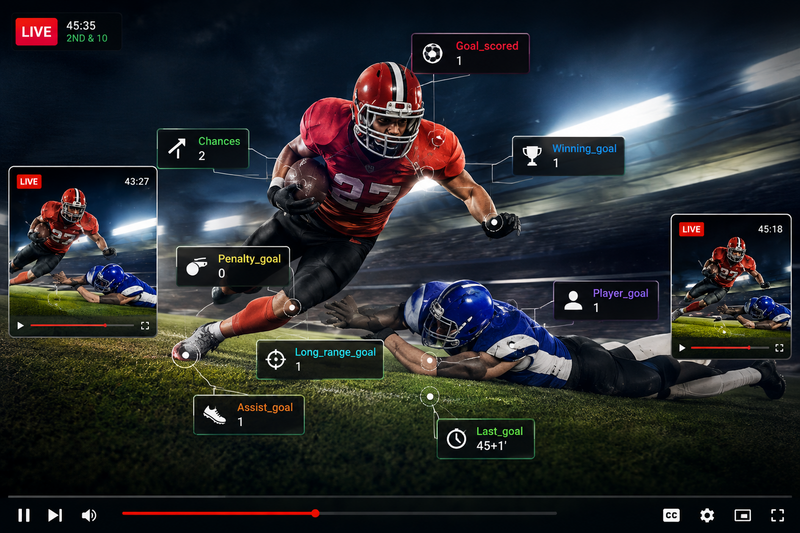
Real-time data gives sports platforms and broadcasters completely new ways to interact with fans. Consider an over-the-top (OTT) sports platform that uses DSG's fitness data analytics to display real-time speed charts, heat maps, or stamina measures during a game.
Real-time monitoring becomes a narrative tool with Data Sports Group, not just a training tool. While corporations improve their relationship with audiences via more involvement and transparency, fans get a greater knowledge of sports performance.
From Data Collection to Insight: How DSG Adds Value
Although there are many wearable technology solutions available in the sports technology market, very few of them actually connect data collection and insight development. The goal of DSG's methodology is to transform complicated, unprocessed data into useful insight.
DSG's sports data ecosystem adds value to wearable technology in the following ways: Complete Integration: Wearable data from many suppliers and devices is effortlessly combined into a single performance perspective using DSG's APIs. Accuracy and Reliability: Sophisticated data validation techniques are used to confirm all metrics, from distance and speed to exertion and recuperation. Predictive analytics: DSG's algorithms predict performance results and injury chances by analyzing past trends. Cross-Platform Use: DSG's solutions are flexible enough to accommodate any use case, be it team management, fan interaction, or broadcast improvement. DSG ensures all the stakeholders receive important information at the appropriate time by fusing AI-powered analysis with athlete performance tracking.
Using Fitness Data Analytics to Increase Fan Engagement
 Going beyond the field and training facilities, wearable data can also be used to improve fan engagement. Sports fanatics are always thirsty for deeper information about the game; they want to know everything, and they want it instantly. With the help of fitness data analytics, digital sports platforms and sports media companies can offer richer and engaging narratives to their audience. For instance, spectators could enjoy a deeper dive into a player’s real-time endurance data at the exact moment they score a goal during a football game. Or pre-game, the audience would like to compare how the competition has been training and its comparison with its rivals.
It is this data-rich information that turns passive viewers into active engagement by not just entertaining but also by educating. Broadcasters and sports platforms can take advantage of fitness data analytics and integrate the same with DSG's worldwide sports data solutions. Transform basic biometric data on players into an engrossing and immersive narrative that keeps viewers interested all season long.
Predictive intelligence is the next big thing in athlete performance tracking. Biometric sports data will be utilized to forecast future events as well as assess current ones as AI and machine learning continue to advance.
In a world where success is measured in milliseconds, Data Sports Group enables the sports industry to use technology precisely by combining fitness data analytics, athlete performance tracking, and real-time data integration. This allows organizations to make better, faster, and more informed decisions, whether they are managing a professional sports team, creating an interactive app, or broadcasting live sports worldwide. DSG provides the innovation and dependability required to transform athlete data into performance in the real world.