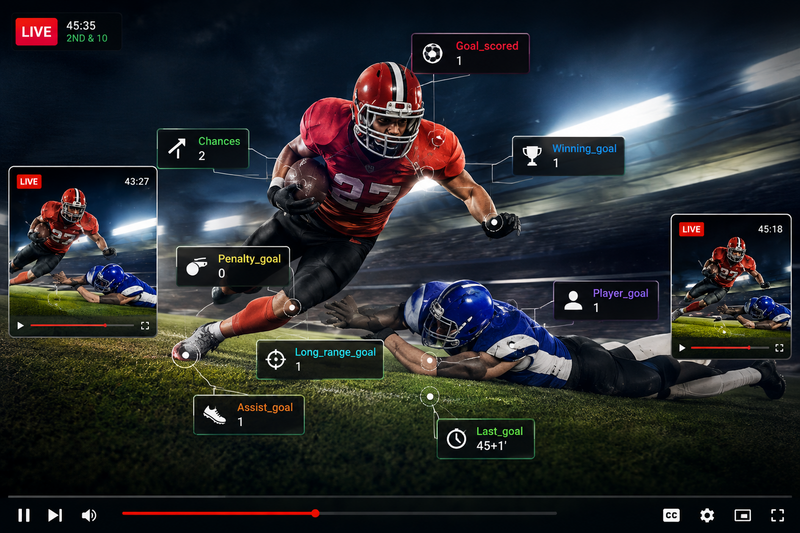
AI sports analytics and machine learning in sports are at the heart of the tremendous digital change that is taking place in the sports business. These technologies are becoming essential elements promoting revenue development, fan engagement, and performance improvement. As more sports organizations and platforms embrace digital solutions, integrating performance monitoring, artificial intelligence, and predictive sports insights has become crucial rather than optional.
From player scouting to fan customization, artificial intelligence has created new possibilities that are revolutionizing how we watch, assess, and participate in sports. The secret for companies and sports platforms is to work with the proper data partner who can offer not only raw data but also insightful, useful information.
The Significance of AI Sports Analytics
Sports analysis used to be centered on conventional measures like averages, goals, and scores. Since the evolution of the game, we have come very far from just static stats; fans demand a more sophisticated understanding of sports. AI sports analytics that identifies patterns and trends in recent and historical data adds more context and helps predict outcomes to engage fans further.
Take, for example, a player's decades worth of records, training schedule, practice data, and even biometric data can be analysed easily with advanced algorithms to predict injuries or performance improvement plans. With the help of AI, we can also forecast the outcome of the game by comparing past team performance, head-to-head records, and current weather conditions. This level of information offers teams and audiences more clarity and even serves as a source of entertainment as teams battle it out on the field against the predictions.
Sports Machine Learning: Using Data to Make Decisions
By studying patterns in data, machine learning, or ML, a branch of technology at the heart of artificial intelligence (AI), trains computers to improve over time. With the help of machine learning in sports, we can predict game results and even offer personalised fan experiences. With machine learning, coaches can automate their scouting process, even get real-time decision support on the field. Platforms can offer predictive sports insights as the games progress. These abilities improve accuracy and efficiency, making sports decision-making more scientific than before.
Performance Monitoring Driven by AI: Boosting Athlete Potential
Athlete performance is among the most significant areas where AI is influencing performance. Through the use of performance tracking AI, wearable technology, and sensors may capture information such as heart rate, sprint speed, recovery time, and workload. With the help of AI, these data sets can then be harnessed to create personalized training programs to maximize athlete potential and even predict when they are overworked to avoid the chances of injury. These predictive insights ensure athletes can stay active for a longer duration and have more successful careers with better health outcomes.
Improving Fan Interaction using Predictive Data
Today's fans demand much more than a scoreboard refresh. They ask for sports data that is current, interesting, and personalized. Using predictive sports data, fantasy platforms can improve fan interaction by pushing real-time notifications like “ Your team captain is underperforming, here’s a suggested substitution.”
This enhances fan retention, boosts time spent on platforms, creates monetization options, and creates excitement. Sports apps, broadcasters, and fantasy platforms can all develop second-screen experiences that keep viewers interested throughout the game by using AI sports data.
The Reasons Data Sports Group Sets the Standard
Even though a lot of businesses say they provide AI-powered solutions, not all of them provide the coverage, accuracy, and dependability required to keep up with the current sports environment. Data Sports Group (DSG) is unique in this regard.
DSG's infrastructure guarantees that sports firms receive the insights they want at the appropriate time by fusing machine learning in sports with reliable data delivery pipelines. Among the main benefits are: Low-Latency Feeds: Real-time transmission ensures that platforms and fans never miss crucial updates. AI-powered feeds: Pre-trained models for predictions, probabilities, and performance metrics generate actionable insights. Comprehensive coverage includes more than 80 sports and more than 5000 competitions. Flexible APIs: Easy integration into OTT, fantasy, or mobile systems.
Businesses that colla borate with DSG may have access to more than just raw data; they can also access an ecosystem of performance tracking, AI, and predictive sports analytics that support player development and fan engagement.
The Effect of AI on Business in Sports
AI sports analytics integration benefits sports companies by opening up new revenue prospects in addition to improving the fan experience. Interactive platforms pull premium sponsorship deals, enjoy longer user sessions, and boost revenue through targeted marketing. Hence, those who apply AI sports analytics and machine learning in sports have more opportunities to be leaders tomorrow.
It is no longer futuristic to be able to provide fans with predictive data, precisely measure athlete performance, and scale up interaction personalization.
Businesses may obtain the resources and knowledge required to maintain an advantage in the fiercely competitive sports industry by working with Data Sports Group as a reliable partner. DSG guarantees that you're driving the evolution of sports data, not just following it. Data Sports Group enables sports firms, broadcasters, and platforms to fully utilize AI sports analytics and performance tracking AI, thanks to its extensive worldwide reach, sports analytics, and tested infrastructure.