In addition to scores and highlights, sports fans in today's digitally-first world require a personalized, immersive, and interactive experience. To meet this need of today’s audience, live sports analytics and real-time sports data have thus become crucial to modern sports platforms. Sports fans' interaction with the game has transformed in unthinkable ways thanks to the introduction of second-screen apps, live broadcasts, and fantasy leagues. Since this change in demand is more than a passing fad, sports companies and sports platforms now have the chance to improve the fan experience and foster customer loyalty.
The Significance of Real-Time in Sports
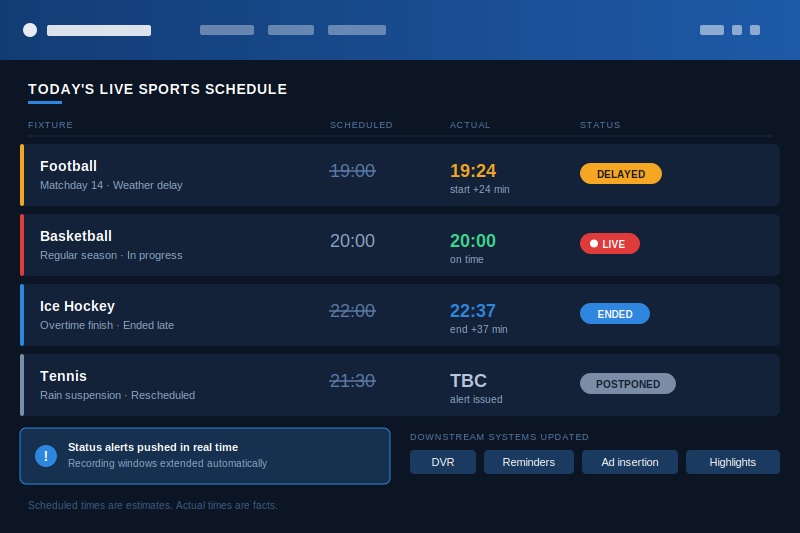
What is the driving factor of sports today? It's the thrill of the "live moment” that drives sports enthusiasts to tune in and watch their favorite players or teams in action. Whether it's a last-minute goal, a pivotal catch, or a buzzer-beater dunk that decides a match, fanatics want instant access to information. This is where real-time sports data comes into play. It allows platforms to deliver instant updates and offer contextual insights. Additionally, real-time sports data also helps in maintaining fan engagement and even assists businesses in taking advantage of short periods of high engagement by providing timely alerts.
The Function of Fan Experience Technology
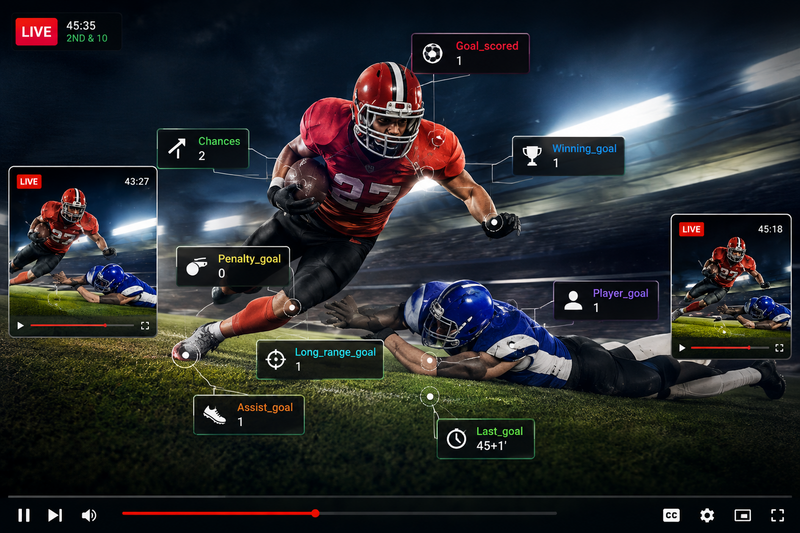
Thanks to advancements in fan experience technology, sports participation has increased to previously unknown levels. These days, augmented reality overlays, real-time in-app polling, and analytics-driven fast replays are common features of digital platforms. In addition to providing sports corporations with significant prospects for audience monetization, these advances enable fans to feel more involved in the action.
Think of a fantasy sports app that pushes personalized notifications in real time when a player that you have selected in your fantasy league is performing well or poorly. Another perfect example is how, during broadcasts, overlays of predicted analytics are shown on the screen during live screening. These tech updates have kept the viewers hooked even after the final whistle blows.
How Personalization Is Powered by Real-Time Analytics
The capacity of live sports analytics to customize fan experiences is one of its biggest advantages. While some fans concentrate on team tactics, some on individual performance, and fantasy users concentrate on points, each fan follows the game in a unique way. Platforms are able to customize experiences through curated highlight reels, tailored stat feeds, and push notifications by examining individual engagement habits.
This degree of personalization improves brand loyalty in addition to fan satisfaction. Investments in premium features are all increased when fans feel heard. Businesses use this customisation to gain a competitive edge that boosts sales.
Data Sports Group: A Reliable Par tner
tner
Even while a lot of companies say they can supply sports data, not all of them have the speed, precision, and personalization needed to satisfy today's fans. Real-time sports data, scalable infrastructure, and state-of-the-art AI-enriched feeds are what set Data Sports Group (DSG) apart.
Sports platforms get access to many features with DSG. You can enjoy the benefits of low-latency feeds, where updates happen incredibly quickly and match the live game. APIs and interactive widgets are ready-to-integrate solutions that need little programming work to increase engagement. Comprehensive coverage of more than 80 sports and 5000 competitions globally, and we are always updating our database regularly. You also get more sophisticated features that go beyond static statistics, such as automatic highlights, contextual narrative, and predictive modeling.
You can provide fan experience technology that engages your audiences and places your platforms at the forefront of innovation in sports entertainment by collaborating with DSG.
The Effect of Real-Time Sports Analytics on Business
Adopting interactive sports data is a financial strategy for sports organizations, not only a way to please fans. Engagement is bound to have a direct impact on advertising opportunities, increased subscriptions, and customer loyalty. Some sports platforms have even seen a boost in click-through rates, better session durations, and unlocked new revenue streams by adding real-time analytics into their offerings
Live sports analytics even grabs the attention of sponsors and advertisers as it promotes contextual advertising. For instance, while showcasing a p layer’s stamina data, a fitness brand can instantly run a real-time advertisement to seamlessly integrate with the context and create a more lasting impact on viewers.
Looking Ahead: How Fan Engagement Will Develop in the Future
As technology develops further in the future, fans' expectations will grow as well. In the near future, we may anticipate fully personalized feeds that change in real time, AR-enhanced second-screen experiences, and AI-powered forecasts integrated into every live broadcast. The sports landscape of the future will be shaped by the platforms that use real-time sports data today.
Investing in solutions that combine speed, interaction, and customization is the obvious choice for broadcasters, startups, and existing sports firms trying to improve their platforms. Data Sports Group is in a unique position to produce these results because of its experience and worldwide presence.
Sports are now about experiencing rather than only observing. In addition to wanting to feel informed, interested, and amused in real time, fans also want to be a part of the event. The secret to fulfilling these expectations is interactive sports data driven by cutting-edge fan experience technologies and live sports analytics. Data Sports Group provides not only data but the entire ecosystem to revolutionize interaction for companies prepared to interact with fans in a way never seen before.