Esport has developed from a niche subculture to a multibillion-dollar global sector that attracts millions of followers, professional teams, corporate sponsors, and media broadcasters. As League of Legends, Dota 2, PUBG, and Valorant grow commonplace in competitive entertainment, real-time esports data and analytics are more crucial than ever. Platforms hoping to maintain a competitive edge and produce captivating user experiences must collaborate with the top esports data providers.
Here comes Data Sports Group (DSG), a tech-first business that provides publishers, over-the-top (OTT) platforms, fantasy leagues, bookies, and team organizations with state-of-the-art esports API solutions. DSG gives platforms the ability to build more complete, data-driven esports content ecosystems with features like player analytics, live match updates, and a comprehensive PUBG stats API.
Why Esports Needs a Smarter Data Layer
Audiences for esports are tech-savvy, data-hungry, and extremely involved. They want more than simply match viewing; they want interactive features, real-time analytics, comprehensive data, and predictive insights. To put it briefly, they anticipate the same degree of thoroughness and accuracy as conventional sports reporting.
But it's really difficult to gather and serve such data across different titles, geographies, and formats. Esports games have complex meta-game strategies that change with each patch, fast action cycles, and changing match formats. A dedicated esports API solution like DSG's is essential in this situation.
What DSG’s Esports Data API Offers
 Real-time feeds, historical data, and performance analytics for a variety of games, such as PUBG, CS:GO, Dota 2, League of Legends, and more, are provided by DSG's esports data solutions. In a clear, developer-friendly manner, our PUBG data API, for example, offers detailed information on kill/death ratios, headshot rates, survivor time, match placements, team ranks, and heat maps.
Additional important offers consist of:
Second-by-second updates on kills, objectives, gold won, and in-game events are provided using live match APIs.
Player Profile APIs: Performance data by team, competition, or area, both past and present.
Tools for Team Comparison: Head-to-head data to get a sneak peek at games.
Tournament data feeds include standings, group tables, and brackets in real-time.
Whether for websites, mobile applications, fantasy leagues, or OTT broadcast overlays, all APIs are designed to be quick, scalable, and simple to integrate.
Fan Engagement in the Esports Era
The modern esports audience is actively involved and not passive. They compete in fantasy leagues, keep tabs on their favorite players, monitor statistics, and even wager on live events. Predictive analytics, dynamic data visualizations, and captivating overlays will provide platforms with a competitive edge in terms of profitability and user retention.
DSG contributes to the realization of this vision. Businesses can now provide leaderboard integrations, real-time match visualizations, predictive analytics models, and dynamic dashboards—all fueled by DSG's esport data feeds—by utilizing a strong backend, responsive design-ready data, and embeddable widgets.
For instance, DSG's PUBG data API allows a platform hosting a live PUBG competition to easily pull in real-time kill feeds, team standings, zone changes, and weapon usage.
Real-World Applications: How DSG Empowers Esports Platforms
Esports Betting Operators: Calculating live odds requires quick and accurate data. The data feeds from DSG increase betting accuracy and decrease latency.
Fantasy Esports Platforms: To influence user choices, daily fantasy operators employ performance analytics, injury reports, and in-depth player statistics. That depth is provided via DSG's APIs.
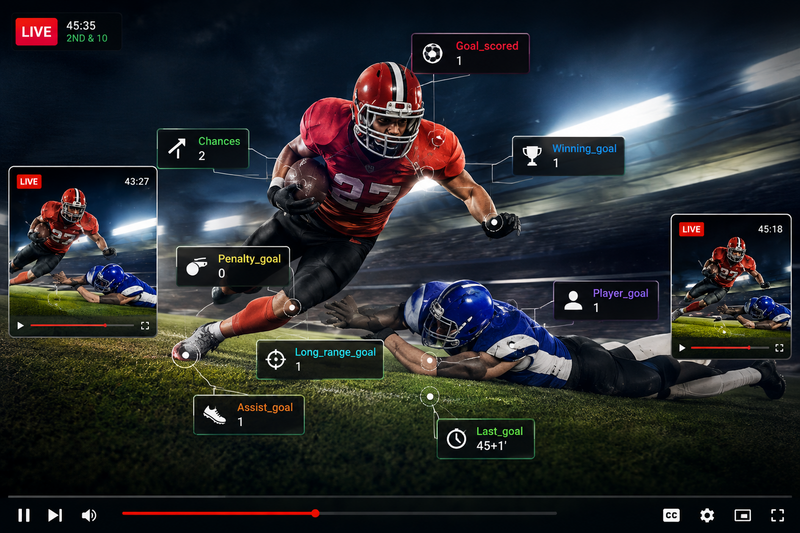
OTT and feeding services: Do you want to provide dynamic visuals or overlay real-time statistics on live video feeds? DSG has the necessary infrastructure to accomplish that.
Team & Player Analytics: Coaches and esports teams utilize data to monitor opponent patterns, tournament preparation, and gauge performance. One important resource for competitive insights is DSG's historical datasets.
Esports News Media: Reporters and analysts can now get data-driven stories, rankings, and trends more quickly thanks to APIs.
How DSG Differs From Other Esports Data Sources
 DSG distinguishes itself from other providers who promise to provide esports statistics by offering extensive coverage, and support for several titles, regions, and tournaments. High accuracy, proprietary event monitoring, and gaming APIs are used to gather and evaluate data directly. Scalability, DSG's design easily expands to accommodate 1,000 or 1 million users. Customization, depending on their business requirements, clients may ask for certain data endpoints or unique connectors. Speed and support, exceptionally low latency data feeds, accompanied by round-the-clock technical assistance. Because of these benefits, DSG is more than simply a data supplier; it is a data partner that comprehends the rapidly changing esports market and develops solutions appropriately.
Towards the Future: What Can We Expect from Esports APIs?
The future of data-driven esports coverage is only going to grow more fascinating with the development of GenAI, machine learning, and AR/VR interfaces. DSG is already looking for partnerships that would allow platforms to use live data to power AI-based fantasy team recommendations, create highlight reels automatically, and even power real-time commentary assistants.
DSG's array of esports data APIs is setting the standard in a field where engagement is driven by innovation and milliseconds count.