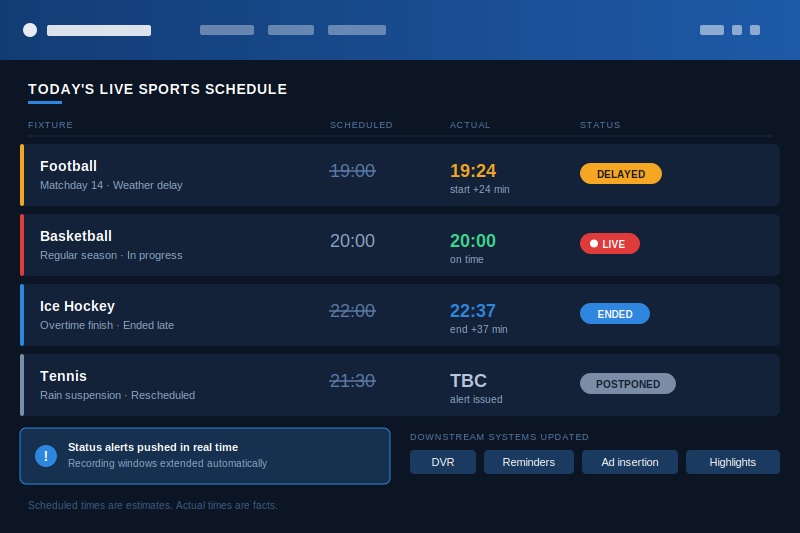
Over the past several decades, there has been a dramatic shift in how we see, interact with, and comprehend sports. Modern technology and real-time sports data streaming with high-precision sensors have superseded simple ledger record-keeping. This tendency has fundamentally changed everything from coaching choices to fan interaction and sports platforms, driven by technological improvements and the need for immediate information. In the sports market, where results may be quantified in milliseconds, stakeholders need to comprehend both the historical viewpoint and the development of real-time sports data as a competitive advantage.
From Pen and Paper to the Birth of Analytics
Data collecting was, at best, crude in the early days of organized sports. Performance indicators were restricted to simple numbers like goals, runs, or points, and scores were manually recorded. Due to their heavy reliance on observation and intuition, coaches frequently overlooked minute details that may have made the difference between winning and failure.
The true turning point—the emergence of sports analytics—did not occur until the latter half of the 20th century. Analytics, made popular by the baseball "Moneyball" movement, showed how data may improve team performance, reveal underutilized potential, and challenge traditional tactics. This innovation opened up a new world for sports organizations, one in which sophisticated analysis and real-time statistics might work together to improve competitive advantage.
Real-Time Sports Data: The Modern Game-Changer
In the present day, real-time sports data is essential to contemporary sports ecosystems. Live metrics have become essential for teams, broadcasters, and particularly sports platforms, whether it is through wearable gear that tracks heart rates and sprint speeds or high-speed cameras that record ball trajectory.
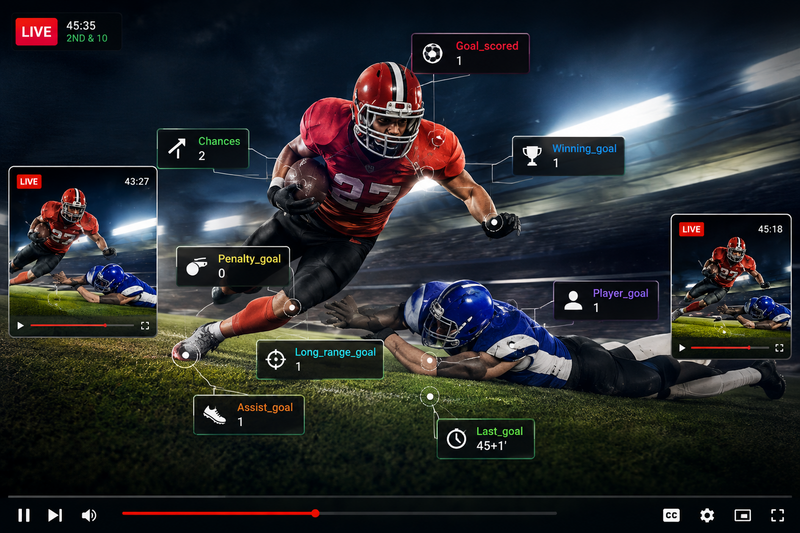
 Faster decision-making, tactical flexibility, and customized fan experiences are also made possible by real-time data. Fans now enjoy immersive watching experiences enhanced with dynamic data overlays, medical teams monitor injury risks, and coaches receive real-time performance feedback. The use of real-time measurements is considerably more prevalent now in most sports. Every motion, response time, and teamwork may be recorded, examined, and utilized to improve broadcasts or game strategy. In this case, sports evolution is essential rather than optional.
The Sensor Revolution: Accuracy Meets Intelligence
Sensors have completely changed the availability and precision of data. These gadgets, which range from biometric sensors to GPS trackers in football boots, are recording every detail of performance. This previously thought-to-be-impossible degree of detail makes micro-analysis conceivable. Sensors provide more than just basic statistics for sports platforms; they also give measures of mental exhaustion, hand-eye coordination, and response speed. This flood of real-time sports data promotes improved audience trust, performance improvement, and more equitable gameplay.
How Sports Analytics is Shaping the Future of Sports
Sports analytics integration is speeding up as sports get more organized and professionalized. In order to create successful plans, find the best talent, and predict opponent tactics, teams are using analysts who analyze enormous amounts of live data. This is a chance for platforms to create tools and user interfaces that contextualize and display real-time sports data. Performance heatmaps, AI-generated projections, and interactive dashboards are no longer considered futuristic features; rather, they are becoming commonplace.
Fan interaction is also aided by this development. Both viewers and gamers want more in-depth knowledge of their preferred athletes and teams. Platforms may stand out and encourage loyalty by providing them with in-game statistics and richer live metrics.
Why Your Platform Needs the Right Data Partner
Selecting the appropriate data supplier might be the difference between innovation and stagnation in this dynamic, data-driven sports climate. Data Sports Group can help with that.
 Data Sports Group is dedicated to providing sports platforms with fast, accurate, and dependable real-time sports data that allows them to improve all facets of their user experience, from comprehensive performance statistics to match simulations and betting connections. We are the perfect partner for any progressive sports company because of our broad coverage, adaptable API, and scalable design. Platforms may stay ahead in a highly competitive market by selecting us as a partner.
Conclusion: A New Era of Intelligent Sports
In addition to altering how we play and watch sports, the transition of sports data from scorecards to sensors has also altered how we create businesses centered around sports. Integrating real-time sports data, state-of-the-art sports analytics, and accurate live stats is now essential to the sports industry's future expansion. Only those who can effectively and purposefully leverage this data revolution will be at the forefront of technical innovation as it picks up speed. Data Sports Group is prepared to be that change agent, making sure your platform not only contributes to but also shapes the future of sports.