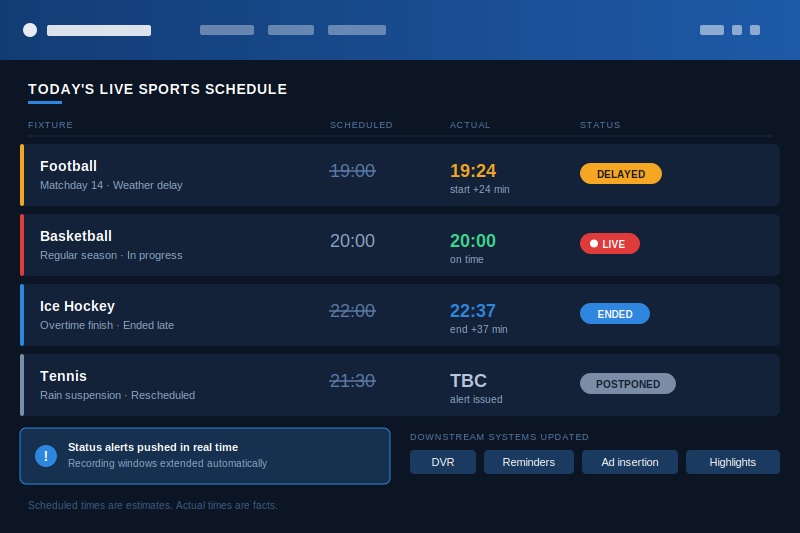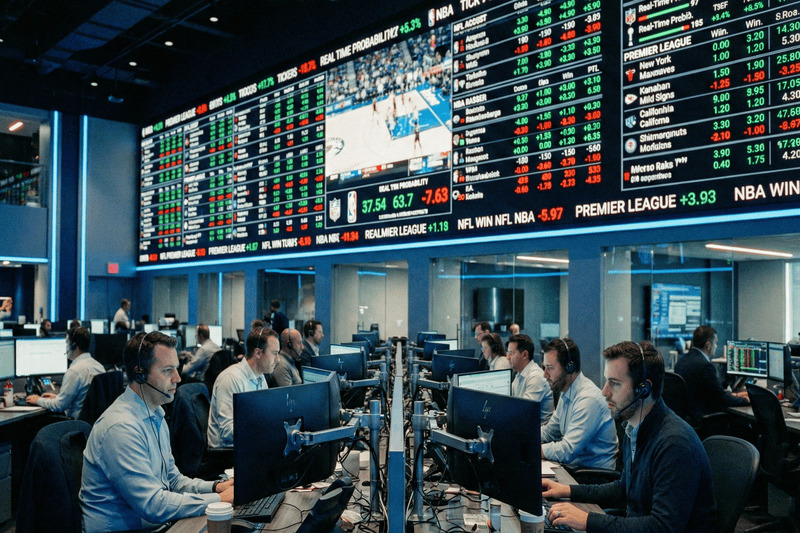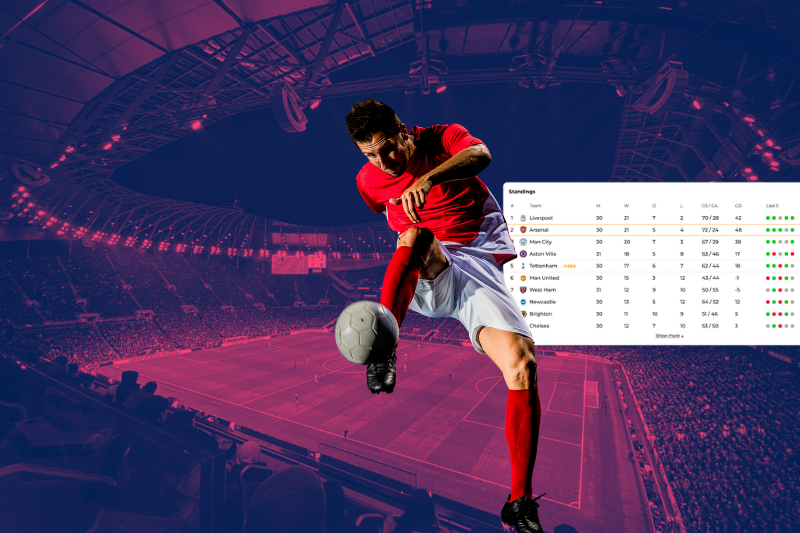
The distinction between live entertainment and digital immersion is becoming increasingly hazy in today's digitalized sports environment. Audiences need more than just a conventional broadcast; they want real-time information, compelling narratives, and context that is rich in data. Real-time data has changed the game in sports broadcasting because of this.
It is now essential to include live coverage data in sports material due to the proliferation of streaming services and second-screen experiences. Predictive analytics, play-by-play graphics, and real-time data are increasingly essential for maintaining audiences' interest, knowledge, and emotional commitment. The ability to use broadcast analytics with a strong real-time feed may significantly increase fan loyalty and revenue for media platforms, online sports businesses, and sports enterprises.
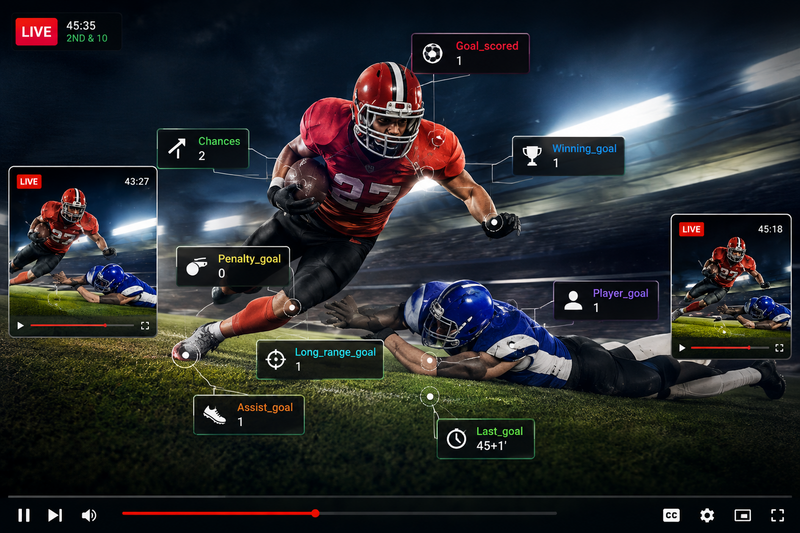
Today's sports fan is not a passive one. Today's fans seek data-driven, interactive watching experiences that strengthen their bond with the game. They anticipate that the broadcast itself will incorporate live coverage information such as player heat maps, top speeds, possession statistics, and real-time victory probability. Additionally, viewers have been conditioned by social media to expect instant information. A generic or delayed broadcast feels out of date, whether it's on desktop, mobile, or television. Sports platforms that don't offer a smooth real-time feed run the risk of losing users to rivals who can use broadcast data to create richer, more interesting experiences.
 What keeps a spectator interested? There is more to it than who scores next. By seeing the invisible—a bowler's delivery pattern, a striker's pressure zone, or a quarterback's accuracy when passing under duress—a top-notch real-time feed improves narrative. Broadcasters can show not just what is occurring, but also why it matters, thanks to this type of data-rich layer. Fans' emotional engagement rises when they comprehend the subtleties through captivating, real-time graphics. Additionally, the value for platform owners, sponsors, and advertisers increases with engagement.
Let's examine broadcast analytics in practical settings. Real-time measures like as defensive recoveries, pass accuracy, and xG (expected goals) aid analysts in providing insightful analysis throughout a football game. These data points represent tales rather than only numerical values. Pitch maps and live bowling speeds are tools used by commentators to analyze plans and forecast changes in momentum in cricket. Analytical tools such as shot charts, player efficiency ratings, and in-game win probability enhance the viewing experience in basketball. All of this is made possible by accurate live coverage data and well-structured real-time feeds that are smoothly sent to end users, apps, and production teams.
The use of real-time data in sports broadcasting has strong business incentives in addition to entertainment value. Viewers who are actively involved on a platform are more likely to click through to sponsor material, stay longer, and come back for more games. Fans are kept engaged during breaks and downtime via platforms that include data-driven fantasy integration, interactive dashboards, and real-time surveys. In addition to raising viewer happiness, these features expand revenue-generating potential through sponsor activations, premium memberships, and targeted advertising.
 Additionally, by using actual engagement measures like watch time, replay value, and on-screen data consumption, broadcast analytics assist advertisers in gauging their brand visibility and return on investment. But accuracy, clarity, and in-depth knowledge of the sports domain are necessary to deliver dependable real-time feeds and high-quality live coverage data. In every way, Data Sports Group (DSG) excels.
With coverage of hundreds of leagues and sports worldwide, DSG offers complete sports broadcasting data solutions. Our APIs are tailored for media companies, streaming services, and digital publishers and are geared for real-time delivery, structured formats, and unique integrations.
The coverage and depth of DSG's data are what make us unique. We provide a comprehensive toolset for contemporary broadcasters, ranging from conventional match statistics to sophisticated analytics and predictive insights. Because of our infrastructure's low latency, real-time updates, and high uptime, DSG is the go-to option for sports organizations that want to use broadcast analytics to improve their programming.
Preparing for the Next-Gen Sports Broadcast
Real-time data will become increasingly more important in sports broadcasting as technologies like 5G, augmented reality, and interactive overlays become more widely used. Those that can provide real-time, tailored, interesting, and data-rich experiences will rule the future. Live broadcast data is essential for immersive fan interaction, AI-powered commentary, and second-screen involvement. Additionally, sports platforms may remain ahead of audience expectations and future-proof their offers by working with DSG as a data partner. Real-time data is now the mainstay of contemporary sports broadcasting. Real-time feed integration adds value at every stage, from generating engaging fan experiences to enabling actionable advertising tactics.
Sports organizations can fully use broadcast analytics with a reliable data source like Data Sports Group, making sure that their audience is not just watching but also participating, responding, and coming back for more. It's time to invest in real-time data if your platform is prepared to make the shift from passive content to intelligent, immersive broadcasting. DSG is the ideal partner to ensure a smooth and significant transition.