In the fast-paced world of sports, where every move, play, and decision could be a winning factor, data has evolved from a basic statistic to a strategic game-changer. Data's influence and insights in sports have transformed the way teams prepare, strategize, and compete in every sport.
Big data is the industry's most valued player, from historical data and foundational scorekeeping to algorithmic performance predicting and incredibly precise player information. Data allows teams and organizations to track performance, anticipate outcomes, and make better decisions on the field. In a football game, if one wants to decide which play to run on fourth down, we just need to examine the statistics to make that decision. In baseball, if one needs to decide which pitcher should pitch the next inning, we just need to look at the data. Although players continue to win games, data helps coaches to put them in the winning position.
Analytics has also made its way into how people watch sports. Off the field, analysts, broadcasters, and fans rely on statistics all the time, whether for play-by-play analysis, forecasting, or making power fantasy league decisions.
While in the past coaches and front offices had kept data analysts at arm's length. Today they are an integral part of the back-end team. Players and management are often always searching for ways to gain an advantage over the opponents which has thus increased the importance of sports analytics.
 What Exactly Is Sports Analytics?
Sports analytics is a recent evolution in the sports industry. Sports analytics uses data to examine things like athletic performance and a team’s financial health in order to enhance a sports organization's operations and overall efficiency. On-field data metrics aid teams in identifying how to improve in-game tactics, nutrition regimens, and other ways to increase the performance levels of their athletes. Off the field, businesses may use data to analyze ticket sales, create marketing campaigns, and save operational costs. In addition to professional teams, betting companies and fans have entered the race as well. Sports betting analytics firms employ data to estimate the possibility of multiple game outcomes. Fans take these odds into account while placing bets, picking players for fantasy teams, and making other stats-based decisions.
How has data changed the game?
1. Turning Data into Winning Strategies: Performance Analysis
Performance analysis is one of the most significant areas where data has had an influence. Athletes are no longer assessed just on simple statistics; instead, detailed data points ranging from speed and agility to biomechanics and heart rate are recorded. This plethora of data enables teams to discover strengths and weaknesses, customize training programs to meet individual requirements, and design winning strategies based on data-driven insights.
2. Athlete Longevity and Injury Prevention
Maintaining athlete health is critical in the quest for excellence. Data is critical in injury prevention because it tracks and analyzes parameters such as workload, tiredness, and biomechanics. Teams may detect possible injury risks, design tailored rehabilitation programs, and make educated player involvement decisions. As a result, not only does an athlete's performance increase but so does the duration of his or her career.
3. Creating Immersive Experiences for Fans
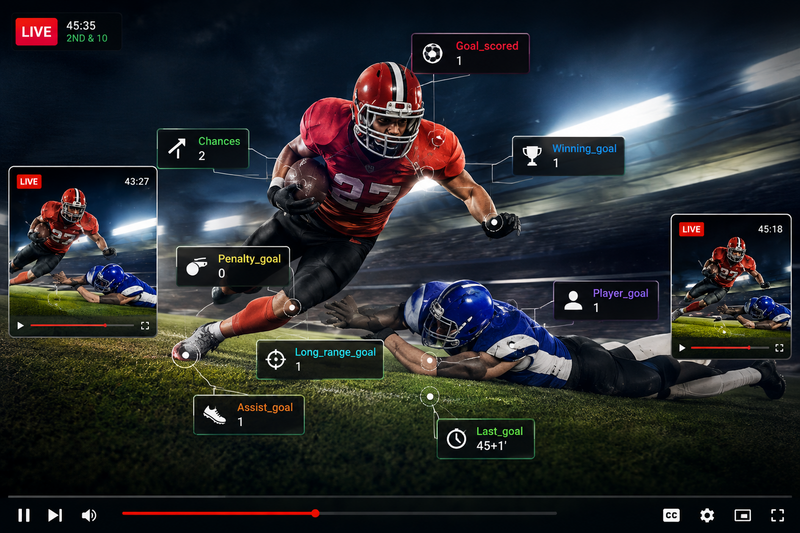
Data has impacted not just the way teams function, but also the fan experience. Fans are now closer to the action than ever before thanks to real-time data feeds, interactive applications, and augmented reality. Data-driven fan involvement has become an essential aspect of modern sports culture, whether it's watching live statistics during a game or experiencing virtual simulations.
 4. Strategic Decision-Making
Front offices and coaches now have access to an extensive amount of data that influences their decision-making processes. Data provides valuable insights into opponent strategy, individual performance, and entire team dynamics, from player selection to in-game tactical decisions. This tactical edge can mean the difference between a playoff run and a season of lost opportunities.
As the value of data in sports grows, so does the need for dependable and comprehensive sports data providers here is where Data Sports Group has excelled in the sports industry.
We give access to a wide selection of sports data feeds, including football, cricket, basketball, and others. From years of historical data to real-time updates, you'll always have the most up-to-date information on match events, individual statistics, and team performance. With options for customization, open documentation, and a dependable support system Data Sports Group has established itself as a trusted name.
One thing is evident as we analyze the effect and insights of data in sports: the era of data-driven excellence is here to stay. Data has become an integral component of the sports environment, from improving player performance to entertaining fans in immersive experiences. With our user-friendly sports data APIs we stand out as the best solution for your sports data needs in this data-driven journey.