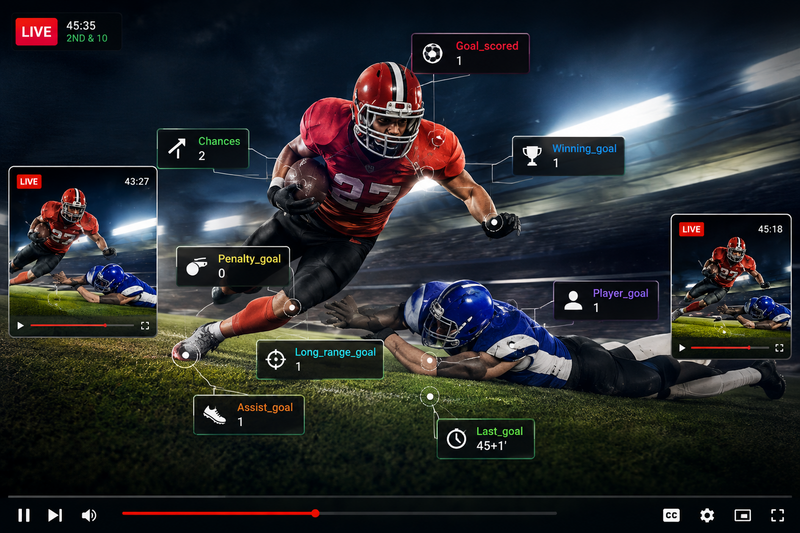
The use of statistics and analytics in professional sports has completely changed how teams prepare for competition. No exemption applies to the National Football League (NFL), where clubs are increasingly using cutting-edge analytics to acquire a competitive edge on the field. The days when coaches would only make game-changing judgments based on intuition and expertise is long past. Advanced Tech and sophisticated algorithms are now playing an important role in game analysis and strategy formation. Such dependence on analytics has even helped the NFL keep their players safe and reduce the risk of injury, thus ushering in a new era of data-driven success.
Using Advanced Analytics to better the game
The NFL has adopted sophisticated analytics in recent years to enhance team performance and decision-making. Traditional metrics like touchdowns and yards gained have now been upgraded with new ones. The amount of data currently available is mind-boggling; it includes player movement, speed, acceleration, and even physiological data. Teams now have the opportunity to look deeply into player performance and uncover previously unattainable important insights because of this abundance of data. The use of analytics is always changing as coaches and general managers around the league adjust to the concept.
On the personnel side, the performance of players from college to the NFL is predicted using machine learning algorithms and GPS tracking of player movements. Football data is getting more understood, and the debate over how analytics is used is growing more complex. Football data is thus becoming more relevant in this debate, and the discussion surrounding the application of analytics is becoming more complicated.
 Player Performance Analysis
Player performance analysis is one of the primary areas where complex data analysis has revolutionized the NFL. The players benefit greatly from continuous endeavors to improve performance on the field. Their actions are monitored and meticulously recorded to aid analysts and coaches in deciphering a player's ability to make decisions. Teams and players even depend on AI-driven algorithms to prepare customized action plans for each and every player keeping their strengths and limitations in mind. A quarterback's ability to make split-second judgments under pressure is improved by knowledge of defensive patterns and tendencies. Running backs can alter their tactics based on current defensive line formation information, which helps them find openings and produce game-changing plays.
Game Strategy Formulation
The way teams develop game plans has also changed as a result of advanced analytics. Coaches may now simulate different game scenarios and forecast possible results using previous data. This permits them to decide when to attempt a two-point conversion, go for a fourth-down conversion, or call a timeout. Teams may also predict their rivals' actions and modify their strategy as necessary by studying opponent data. The defense now has the knowledge necessary to set up in the best possible position to potentially intercept or interfere with the plays of the opposing side.
The data may immediately reveal to coaches which plays and formations an opposition offense or defense frequently uses (i.e., team tendencies), as well as how effective certain plays were against those formations, which is another example of how analytics has improved game planning. It is quite beneficial to have that knowledge without having to watch several hours of footage.
Ushering in the era of ‘Digital Athlete’
The NFL works with the AWS Machine Learning Solutions Lab to improve player safety. The NFL is leveraging AI and ML on AWS to create the Digital Athlete, a computer-generated representation of an NFL player that might be used to better predict and perhaps prevent player injury. The Digital Athlete performs simulations utilizing NFL data to ascertain how player performance and safety are affected by equipment choice, player’s physical condition, weather, field conditions, lighting, game strategies, and other factors. The League then uses this technology to assess each player's specific risk level, lower that risk as they practice for upcoming games, develop unique training and recuperation programs for each player, look for ways to improve coaching techniques and equipment, and apply rule modifications to keep players safe.
Giving due importance to player health and preventing injuries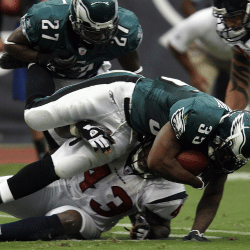
Being a physically demanding sport, the NFL is always concerned about injuries. While there may be some limitations to how Digital Athlete may be used to monitor player health, sophisticated analytics are extremely important for injury prevention and player wellness. Teams may monitor player workloads and spot symptoms of weariness or possible injuries using the information on player motions and physiological indicators. By using this knowledge, trainers may develop individualized recovery regimens that lower the danger of overexertion and long-term harm.
Analytics also aid in the creation of safer machinery. Researchers can spot trends and patterns in injury data that indicate problem regions. This knowledge helps manufacturers create safety equipment that targets certain injury concerns, ultimately improving player safety throughout the league.
Data is a useful tool for maintaining the excitement and competition of professional football while also making it safer for the players. Since 2002, the NFL has altered more than 50 rules to reduce the risk of injury. In order to prevent injuries, the NFL also collects data on every play a player makes utilizing tools like equipment sensors and video evaluation. Through its collaborations with AWS and the NFL Players Association, the NFL has sparked a revolution in helmet design and elevated player enthusiasm with safer gear.
Looking at the future
As part of its increasing analytics community outreach, the NFL has hosted the Big Data Bowl, a crowd-sourced competition sponsored by AWS, for several years. The Big Data Bowl encourages participants to investigate statistical advancements in football utilizing both conventional football statistics and Next Gen Stats, as well as to identify novel strategies for increasing fan engagement using sports data company.
The potential for advanced analytics in the NFL is limitless as technology develops further. By utilizing advanced analytics, and raw data feeds from sports data companies, the NFL has demonstrated its commitment to being on the cutting edge of innovation and ensured that the game we love will continue to excite us for years to come.
With the help of automated machine learning models and Data Sports Group's services for raw sports data, make significant advances in the sport with artificial intelligence (AI). We are an affordable sports data provider company, offering real-time information for analytics and strategy development. Our extensive historical records enable even long-term studies to be conducted using the data. Our decades of archived data helps sports data analytics company get fresh insights and build reliable forecasting models. Get in touch with our team to learn more about our offerings.